
Natalie Smith: January 2026 in Salamanca, Spain
To celebrate the end of the first semester, there was a large celebration in the Plaza Mayor, which takes place every year on the last Thursday of the semester, as there are no classes the next Friday. The celebration involved a concert with local bands, and thousands of students gathered to celebrate the end of the semester at midnight. In the UK, university celebrations like this would usually be organised directly by the university itself. However, in Salamanca the university offers fewer student life activities, and larger celebrations, such as the frequent concerts held in the Plaza Mayor, appear to be organised by the city council instead.
I also had the opportunity to take part in free Spanish lessons over five weeks. These lessons were organised by students undertaking a master’s in English teaching, who offer free classes to Erasmus students as a way of practising their teaching skills. I enjoyed that the lessons were tailored to what we wanted to practice, and everyone in my class agreed we wanted to focus primarily on improving our speaking skills. It was a great opportunity to practise grammar concepts and then apply them in our conversation while receiving feedback from the teachers.
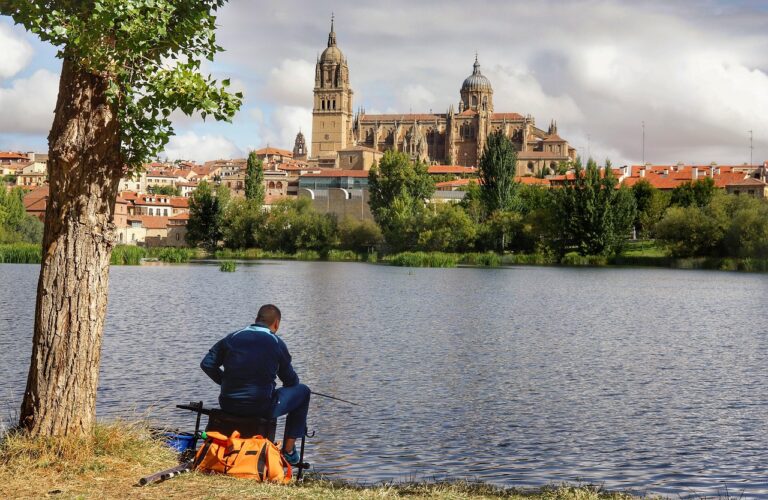
I also decided to visit the Cathedral of Salamanca, one of the city’s most significant historical landmarks. Although I had seen the cathedral from the outside before, I took the opportunity to explore the interior during its free opening hours on Tuesday afternoon. The city has two connected cathedrals: the New Cathedral, which was built between the 16th-18th centuries, and the Old Cathedral, constructed between the 12th-13th centuries. Inside the Old Cathedral, I observed medieval frescoes and a darker interior that reflected the style of the Middle Ages. The New Cathedral was much larger and brighter, with high ceilings and detailed chapels that demonstrated the later Gothic and Renaissance influences. The visit helped me better understand the historical development of Salamanca and appreciate the city’s rich cultural heritage and long history.
Para celebrar el fin del primer semestre, hubo una celebración grande en La Plaza Mayor, que tiene lugar cada año el último jueves del semestre, ya que no hay clases el siguiente viernes. La celebración involucró un concierto de bandas locales, y miles de estudiantes se reunieron para celebrar el fin del semestre a medianoche. En el Reino Unido, celebraciones universitarias como esta normalmente son organizadas por la universidad. Sin embargo, en Salamanca la universidad ofrece menos actividades de vida estudiantil, y celebraciones más grandes como los conciertos frecuentes en La Plaza Mayor, en cambio, parecen ser organizadas por el ayuntamiento.
También tuve la oportunidad de participar en clases de español gratuitas durante cinco semanas. Estas lecciones están organizadas por estudiantes que cursan un máster en enseñanza de inglés, quienes ofrecen clases gratuitas a estudiantes de Erasmus para practicar sus habilidades de enseñanza. Disfruté que las lecciones estaban adaptadas a lo que queríamos practicar, y todos en mi clase estaban de acuerdo en que queríamos enfocarnos principalmente en mejorar nuestras habilidades orales. Fue una gran oportunidad de practicar conceptos gramaticales y después aplicarlos en nuestra conversación, mientras recibíamos retroalimentación de los profesores.
Además, decidí visitar la Catedral de Salamanca, uno de los monumentos históricos más importantes de la ciudad. Aunque ya había visto la Catedral desde el exterior, tuve la oportunidad de explorar el interior durante su horario de entrada gratuita los martes por la tarde. La ciudad tiene dos catedrales conectadas: la Catedral Nueva, que fue construida entre los siglos XVI-XVIII, y la Catedral Vieja, que fue construida entre los siglos XII-XIII. Dentro de la Catedral Vieja, observé frescos medievales y un interior más oscuro que reflejaba el estilo de la Edad Media. La Catedral Nueva era más grande y luminosa, con techos altos y capillas detalladas que mostraban las influencias del gótico tardío y del Renacimiento. La visita me ayudó a entender el desarrollo histórico de Salamanca y a apreciar su rica herencia y larga historia.