
Eva Wigham: El Inicio de Una Aventura en Buenos Aires: ¡La Ciudad Más Linda del Mundo! – February 2026
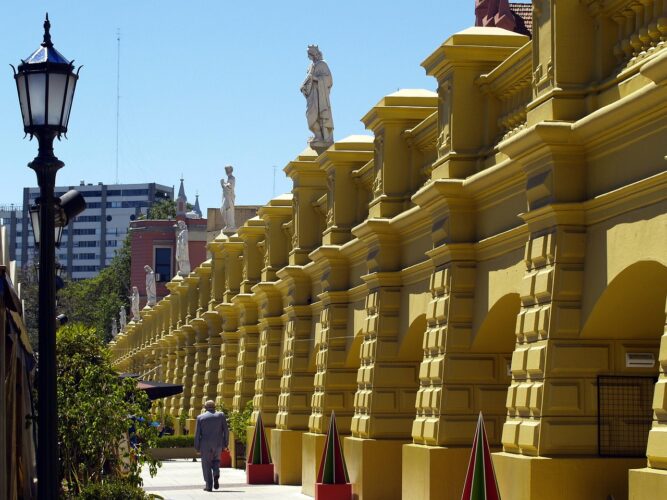
Algunos días despues mi entrada a Argentina, mientras que andaba por la Avenida San Juan, ví a una valla publicitaria un poco antigua pero muy impressionante. La escritura exclamaba: ‘Buenos Aires: ¡la ciudad más linda del mundo!’
Este eslogan ha quedado con mí. Hace casí un mes que llegué y cada día aprendo un poco más de la verdad de eso. Con todo su historía, triunfos y cicantrizes juntos, encontro que la ciudad me trae a momentos de asombro y emoción tanto que los de pesar.
Me lo siento con más distinción en el barrio de San Telmo, donde se fundó Buenos Aires y estoy viviendo ahora. A cincuenta metros de mi casa, hay un jardín sombrado y solitario que sirve como un lugar de encontramiento para hombres con caras sucias y sin sonrisas; tienen solamente zapatos llenos de agujeros y cigarillos doblado. Allá, ellos se sientan para porciones largos del día y no harán mas que fumar y mirar el trafíco que pasa sin pausa, mañana hasta noche.
En la dirección opuesta, una desesperación similar se llena y acumula debajo del paso elevado implacable. Parcelas de hormigón cerradas pobladas con equipamiento deportivo roto y piscinas plásticas deterioradas se disfrazan de ‘caminos’ en desuso, pero realmente son ecos de ‘El Club Atlético’, ubicado a solo dos cuadras al oeste. Dentro de este edificio, presos politicos de numeros disconocidos – civiles – eran detenidos, torturados y asesinados durante La Guerra Suciae n Argentina (1947 a 1983).
La ciudad me asombra, tan vibrante y rebosando de vida contemporánea, con su capabilidad de para mantener el espacio para los horrores indescriptibles del passado. Tal vez los que han sobrevivido a esos años terribles me dirían que ya se ha olvidado demasiado, pero incluso para un extranjero como yo, puedo sentir una fuerte energía alrededor de los sitios históricos que aún existen.
Sin embargo, a lo largo de esta corta distancia entre la pobreza moderna y el trauma histórico, también me dejo llevar por la alegría semanal de la animada Fería de San Telmo y por el colorido arte callejero que celebra algunas de las facetas más amables de Buenos Aires: sus encantadoras caricaturas tradicionales, su diversa identidad cultural y, por supuesto, esos tesoros nacionales cuyos talentos han deleitado a más de una nación (y, más específicamente, me refiero a Messi).
La Plaza Dorrego, en particular, es mi favorita los domingos. Incluso cuando estoy solo, no puedo evitar reírme junto con la diversión que comparten tanto turistas como locales, mientras los artistas callejeros bailan tango con pasión; los músicos llenan las calles ya estrechas con sus sinfonías; y pequeños objetos de mil formas, tamaños y colores brillan bajo la luz del sol, en un intento constante por captar tu atención.
Aun así, no hay mejor manera de descubrir los secretos extranjeros que dejarse llevar por un local — ¡y qué suerte la mía de vivir no con uno, sino con dos porteños! Dos, claro está, si no contamos a los igualmente importantes gatos de la casa, Benito y Leo. Licia, la mujer de la casa, me ha ayudado con las negociaciones del intercambio en el “blue market”, que me ha dado miedo desde mi llegada. Ella se aseguró de que recibiera la tarifa correcta, y no la de los turistas sin idea. Además, gracias a ella he encontrado mi próximo hogar para cuando comiencen mis estudios universitarios a principios de marzo. Una amiga suya, Giselle, está alquilando un departamento en el hermoso barrio de Coghlan — mucho más cerca de mi universidad que San Telmo, aunque me dará tristeza dejarlo.
Sin embargo, Coghan tambien me parece tan rico en cultura y historia que los barrios un poco más al centro de Buenos Aires. Pues, no dudo que seguiré encontrando a Buenos Aires la ciudad más linda del mundo.
En traducción:
Several days after my arrival in Argentina, whilst I was walking along Avenue San Juan, I saw an old but impressive billboard. The writing exclaimed: ‘Buenos Aires: the world’s most beautiful city!’
This slogan has stayed with me. It has been almost a month since I arrived and each day I learn a little more of its truth. With all of its history, triumphs and scars, I find the city brings me moments of awe and excitement as well as those of sorrow.
I feel this most distinctly en the San Telmo district, where Buenos Aires was founded and I am currently living. Fifty metres from my house, there is a shaded and lonesome garden that serves as a meeting place for men with dirty faces and no smiles; who have only pockmarked shoes and bent cigarettes. There, they sit for long portions of the day where they will do nothing more than smoke and watch the traffic that passes without pause, from morning until night.
In the opposite direction, a similar desperation feels and pools beneath the relentless overpass. Fenced-off patches of concrete populated by broken athletics equipment and delapidated, plastic swimming pools masquerade as disused ‘caminos’, but are in reality echoes of ‘El Club Atlético’, located just two blocks west. Inside this building, unknown numbers of political prisoners – civilians – were detained, tortured, and killed during the Dirty War in Argentina (1974 to 1983).
The city amazes me, so vibrant and bursting with contemporary life, with its ability to hold space for the unspeakable horrors of the past. Perhaps those who have survived those terrible years would tell me that already too much has been forgotten, but even to a foreigner like myself, I can feel a strong energy that still exists around those historical.
Yet, along this short distance between modern poverty and historic trauma, I am also swept up by the weekly joy of the lively Fería San Telmo and the colourful street art that celebrates some of Buenos Aires’ rosier qualities: its charming traditional caricatures, diverse cultural identity, and of course those national treasures whose gifts have delighted more than just one nation (and, by that, I am more specifically referring to Messi).
Plaza Dorrego, in particular, is my favourite on a Sunday. Even alone I cannot help but laugh along with the amusement shared by tourists and locals alike as street artists dance the tango with passion; musicians fill the already narrowed streets with symphonies; and trinkets of a thousand different shapes, sizes and colours twinkle in the sunlight, in a constant bid to win your attention.
Still, there is no better way to discover foreign secrets than to go along with a local – and what luck I have to live with not one, but two porteños! Two, of course, if you are not counting the equally significant house cats, Benito and Leo. Licia, the lady of the house, helped me with the negotiations of the ‘blue market’ exchange, which has worried me since my arrival. She made sure that I received the correct rate, and not that of the clueless tourists. Furthermore, through her I have found my next home for when my university studies begin in early March. A friend of hers, Giselle, is renting an apartment in the handsome neighbourhood of Coghan – much closer to my university than San Telmo, although I will be sad to leave it.
However, Coghan also seems to me as rich in history and culture as those neighbourhoods more central to Buenos Aires. So, I’ve no doubt that I will continue to find Buenos Aires the most beautiful city in the world.