
Eva Wigham: January in The Osa Peninsula, Costa Rica, 2026
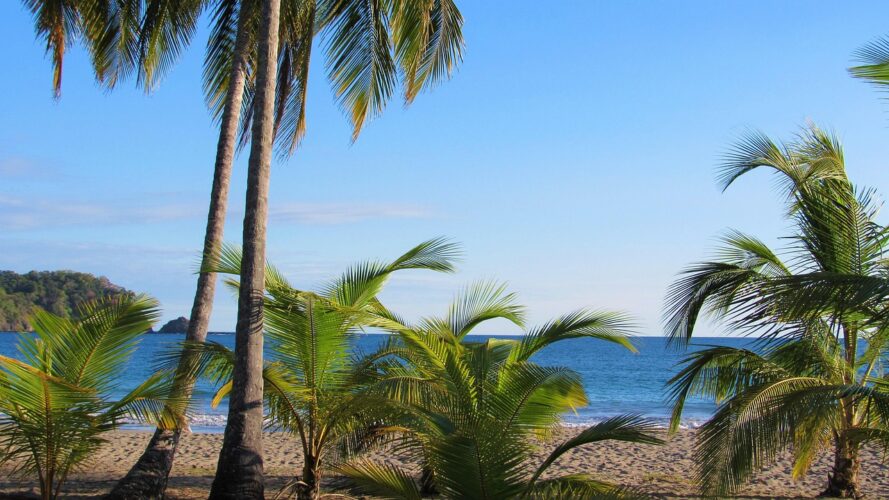
Costa Rica, literalmente la “costa rica”, vive hasta y más allá de los límites de su nombre, si está dispuesto a intercambiar riqueza material por una vida más sencilla.
Tenía una vaga comprensión de este arreglo antes de llegar a la Península de Osa. Despojar mi vida diaria a mi entorno inmediato – especialmente mi entorno lingüístico – me pareció la forma más eficiente de revivir mi español antes de mi intercambio de estudios en Argentina. Ahora, no solo mi español se renueva, sino mi gusto por la aventura ha renovado.
El equilibrio entre el trabajo y la vida personal asignado a quienes comercian con el trabajo por la cama y la comida es generoso en esta selva de fincas y playas vacías. Durante tres días de trabajo a la semana, Channy me proporciona una habitación propia y un armario en su cocina. Mi anfitrión de voz suave incluso rellena este último con algunos suministros básicos al final de cada semana: arroz, frijoles, café, azúcar y aceite.
A cambio, trabajo junto a él y a otra escapada del Oeste, Emelina, mientras el día nos da luz solar. La finca de Channy gira en torno a cientos de árboles frutales, de todas las variedades: naranja, mango, mamón, fruta de la pasión, jocote, plátano. En la temporada de lluvias, Channy confía en la ayuda de personas como yo para cosechar las ofrendas de su huerto. De diciembre a abril, la estación seca es el momento de cambiar el suelo, plantar nuevas semillas y hacer cambios alrededor de la granja.
Por el momento, Emelina y yo tomamos nuestros días de trabajo para restaurar el invernadero a su antigua gloria. Es pacífico trabajar junto a Channy; es meticuloso y dedicado a su granja, pero evidentemente encuentra alegría en compartir su mundo con los no iniciados. Muchas veces al día, voy a interrumpir su atención estudiosa a la pintura o la fontanería para aclarar una frase o una palabra. Tengo suerte de haber encontrado una guía tan paciente.
En nuestros días libres, Emelina y yo nos aventuramos en bicicleta a Puerte Jiménez. Es solo un pequeño pueblo pesquero, pero comparado con la soledad general de la Península de Osa es una metrópolis. He hecho buenos conocidos de los lugareños. Algunos sonríen y pasan con un saludo relajado, pero muchos no están perturbados por mi acento cuando estoy en busca de conversación.
Creo que la simplicidad de mi vida aquí me ha hecho un mejor oyente. En la finca de Channy, debo escuchar su instrucción paciente; en la ciudad, debo prestar mucha atención a las historias que me cuentan. La anciana que se sienta a la sombra de su propia puerta, mientras compro pescado a su nieto mayor, no necesita mis preguntas para mantener sus cuentos: está feliz de vivir sus recuerdos en voz alta. Sin embargo, ella es más feliz cuando le pido que me cuente más sobre la casa en la que su padre la crió, o la forma en que sus propios hijos aprendieron a leer. Ella se toma el tiempo para sonreír ante mis errores y corregir mi gramática cuando sea necesario.
Es un placer poder tomarse el tiempo para escuchar. Es aún mejor poder tomarse el tiempo para aprender. Ambos son una riqueza digna que se puede encontrar aquí, en Costa Rica.
En traducción:
Costa Rica, literally the ‘rich coast’, lives up to and beyond the boundaries of its name – if you are willing to exchange material wealth for simpler living.
I had a vague understanding of this arrangement before arriving in Osa Peninsula. Stripping my daily life down to my immediate environment – especially my linguistic environment – seemed to me the most efficient way to revive my Spanish ahead of my study exchange in Argentina. Now, not only is my Spanish renewed, but my taste for adventure refreshed.
The work-life balance allotted to those who trade labour for bed and board is generous in this jungle of fincas and empty beaches. For three days of work a week, Channy provides me a room of my own and a cupboard in his kitchen. My softly spoken host even refills the latter with some basic supplies at the end of every week: rice, beans, coffee, sugar, and oil.
In return, I work alongside him and another escapee from the West, Emelina, for as long as the day gives us sunlight. Channy’s finca revolves around hundreds of fruit trees, of all varieties: orange, mango, mamon, passionfruit, jocote, banana. In the rainy season, Channy relies on the help of people like me to harvest the offerings of his orchard. From December to April, the dry season is the time to change soil, plant new seeds and make changes around the farm.
At the moment, Emelina and I take our working days in turn to restore the greenhouse to its former glory. It is peaceful to work beside Channy; he is meticulous and dedicated to his farm but evidently finds joy in sharing his world with the uninitiated. Many times a day, I will interrupt his studious attention to paintwork or plumbing to clarify a phrase or a word. I’m lucky to have found such a patient guide.
On our days off, Emelina and I venture out on bicycles to Puerte Jiménez. It’s only a small fishing town but compared to the general solitude of Osa Peninsula it’s a metropolis. I’ve made good acquaintances of the locals. Some smile and pass by with a comfortable greeting, but many are not perturbed by my accent when I’m out searching for conversation.
I believe the simplicity of my life here has made me a better listener. In Channy’s finca, I must listen to his patient instruction; in town, I must pay close attention to the stories I am told. The elderly lady who sits in the shade of her own doorway, whilst I buy fish from her eldest grandson, doesn’t need my questions to keep her tales going: she is happy to live her memories out loud. Yet she is happiest when I ask her to tell me more about the house her father raised her in, or the way her own children learnt to read. She takes the time to smile at my mistakes and correct my grammar when needed.
It is a pleasure to be able to take the time to listen. It is even better to be able to take the time to learn. Both are a worthy wealth to be found here, in Costa Rica.