
Case Study – Henrietta Jinivizian, 2025-26
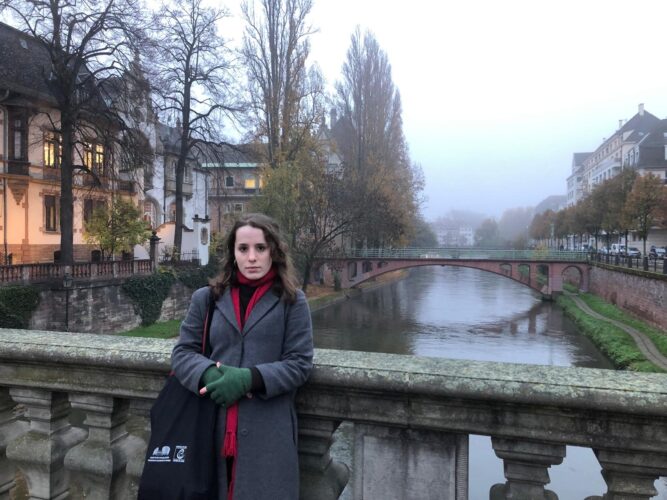
I returned from Strasbourg just over a week ago, and it’s certain that an Alsace-shaped trou is etched on my heart. In limbo between my return to the UK and the beginning of a summer internship in London, I feel as though I am in a sort of grieving period for my year abroad. The memories of friendships, cultural experiences, and the city I called home for the past 9 months endure, and I feel so close that I could almost reach out and be plunged back into life there. I feel a magnetic pull towards France, and if my year abroad has taught me anything, it’s that the post-university abyss feels more manageable to tackle in the knowledge of the ease to return to the country I fell in love with.
I now fully recognise the fact that speaking a foreign language is a superpower. It connects us in ways we aren’t always conscious of – the feeling of being connected, being understood, and of understanding. I’m sitting on a train and hear two women next to me speaking French. One of them remarks « la mademoiselle la-bàs lit un roman français ». I pretend not to be listening and enjoy my secret. The book in question is Le pays des autres by Leïla Slimani: even this makes me feel connected to Alsace. The story follows a young Alsatian woman who moves with her Moroccan husband back to Meknes through the final years of French colonial rule in the region. Slimani often refers to elements of Alsatian culture and regions that I am very familiar with, including drinking eau de vie, visiting Mulhouse or traversing the Forêt Noire just past the franco-German border.
I have also been reflecting a lot recently about language and identity. Upon a recent outing to watch the Norwegian film ‘Sentimental Value’ (Norwegian audio with English subtitles) I thought: how does the way I watch this film and perceive the language so foreign to me affect the way I take it in? And, if it was in my native language, would I feel closer to it? In the context of my French, I find myself posing similar questions upon writing my diary (in French since the start of my year abroad) such as: do I have a separate identity in French, or is this just an extension of my English self? Does the way I relate to others differ? Does my humour differ? My anger? Or perhaps the way I express fondness towards others? I certainly have noticed a significant difference between French and English humour – notably the dryness and sarcasm I use in English. On the flip side, in instances when I am shocked, angry, in awe or thrilled, I feel my French self encapsulates such feelings much more poignantly than my English.
My final weeks in Strasbourg were marked by treasured memories including a trip to Marseille and Sanary-sur-Mer, as well as hiking and cycling around Strasbourg and the Forêt Noire with my French friends. I’m feeling a little melancholy about being back home but assured by my newfound ambition to return to l’Hexagone for a master’s degree or post-graduate employment. I’m extremely grateful to have received a John Speak Scholarship this year and, beyond aiding me with the finances of living abroad, it has above all provided invaluable support for my language development – encouraging me to reflect in French on the social, political and cultural climate of my positioning in Strasbourg, and providing me with tailored feedback to ensure I am always moving forward. Thank you to the Trust for your support!