
May in Salamanca – Natalie Smith – May 2026
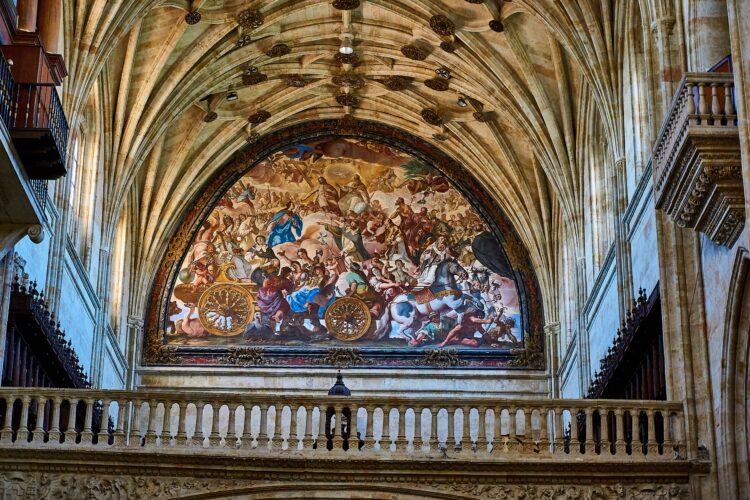
Semana Santa is an important week of religious celebrations that take place in Spain in the week leading up to Easter Sunday. I found it interesting how seriously Easter celebrations are taken in Spain compared to the UK. The celebrations felt particularly important in Salamanca as the region of Castile and Leon seems to be slightly more traditional than other parts of Spain I have visited. During Semana Santa, many shops closed for most of the week and supermarkets often shut down during the final part of the week, showing how important the celebrations are for the local people. The people of Salamanca also seem unbothered by a week of mass road closures to accommodate the celebrations, which is difficult to imagine in the UK.
The celebrations involved processions carrying large floats of Jesus, the Virgin Mary and other religious symbols while accompanied by marching bands, candles and people wearing elaborate traditional costumes. The streets become very crowded with people waiting hours for larger processions to get a good view, although it became easier to see as the procession moved. At the larger processions, the atmosphere felt very serious and respectful, with complete silence from the audience as the procession passed. One tradition I found particularly interesting involved people carrying large candles that dripped wax onto the streets. Young children then walked around with a small glass collecting wax drippings from different candles until the glass was full to create an Easter decoration.
At first, I assumed that these processions were organised by schools as most of the participants were children, but I later discovered that they are actually organised by religious societies called brotherhoods. These brotherhoods are rooted in family tradition, as children join the same brotherhood as their parents and spend the year preparing for the event. Semana Santa was a fascinating cultural experience and gave me a much better understanding of the local culture. The atmosphere of the city felt different during that week, and it was impressive to see how much community spirit and pride is still alive in this region of Spain.
La Semana Santa es una celebración importante que tiene lugar durante la semana antes del Domingo de Resurrección. Me pareció interesante lo serios que se toman las celebraciones de Pascua en España en comparación con el Reino Unido. Las celebraciones parecían especialmente importantes en Salamanca ya que la región de Castilla y León parece ser ligeramente más tradicional que otras partes de España que he visitado. Durante Semana Santa, la mayoría de las tiendas estaban cerradas y los supermercados también estaban cerrados la mayor parte de la semana, lo que demuestra lo importantes que son las celebraciones para la gente local. También la gente de Salamanca parecía despreocupada por una semana de cierres masivos de carreteras para acomodar las celebraciones, lo cual es difícil de imaginar en el Reino Unido.
Las celebraciones consistían en procesiones que llevaban grandes pasos de Jesús, la Virgen María y otros símbolos religiosos mientras estaban acompañadas con bandas de música, velas y gente llevando trajes tradicionales elaborados. Las calles estaban muy llenas de gente esperando durante horas para ver las procesiones más grandes y conseguir un buen sitio, aunque se volvió más fácil verlas a medida que la procesión avanzaba. En las procesiones más grandes, la atmósfera se sentía muy seria y respetuosa, con un silencio completo de la audiencia mientras pasaba la procesión. Una tradición que me pareció especialmente interesante involucra a personas que llevaban velas grandes que goteaban cera en las calles. Entonces los niños pequeños caminaban con un vaso pequeño recogiendo gotas de cera de diferentes velas hasta que el vaso estuviera lleno para crear una decoración para Pascua.
A simple vista, asumí que estas procesiones estaban organizadas por escuelas puesto que la mayoría de los participantes eran niños, pero más tarde descubrí que en realidad están organizadas por sociedades religiosas llamadas cofradías. Estas cofradías están vinculadas a tradiciones familiares, ya que los niños se unen a la misma cofradía que sus padres y pasan el año preparándose para las procesiones. La Semana Santa fue una experiencia cultural fascinante y me dio un entendimiento mucho mejor de la cultura local. La atmósfera de la ciudad se sentía diferente durante esa semana, y era impresionante ver cuánto espíritu comunitario y orgullo siguen vivos en esta región de España.